
Last updated September 24, 2026
Free in-home measure and quote - PGT, CGI and CWS impact lines compared on your actual openings, style by style

 Before
 After
After Before
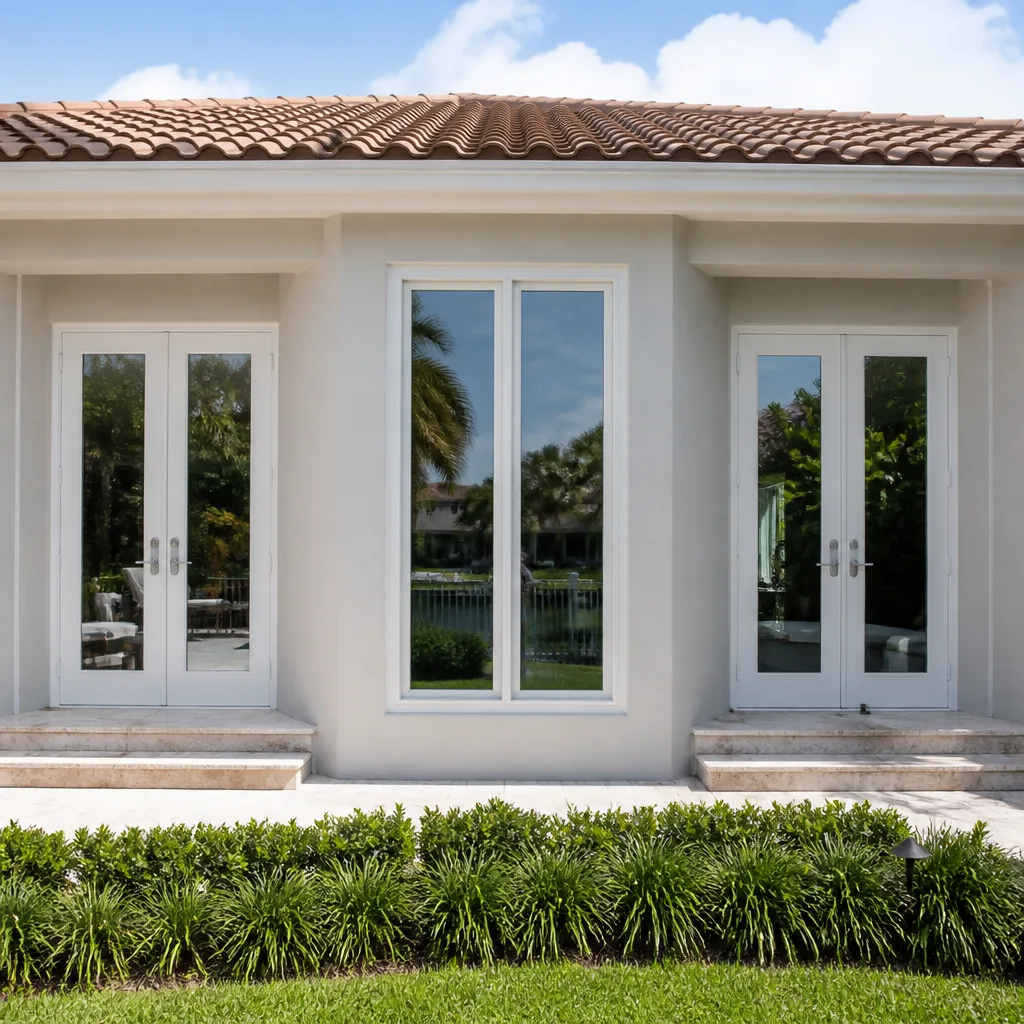 After
After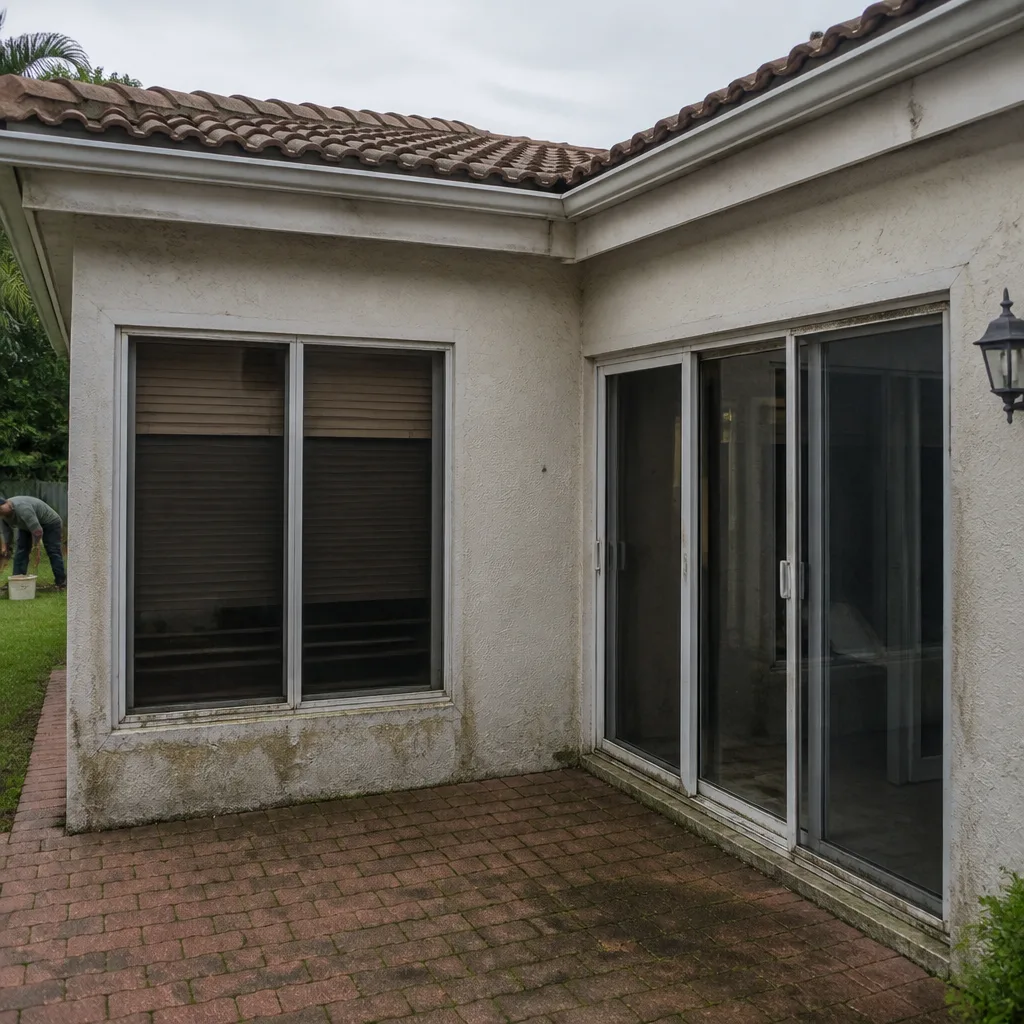 Before
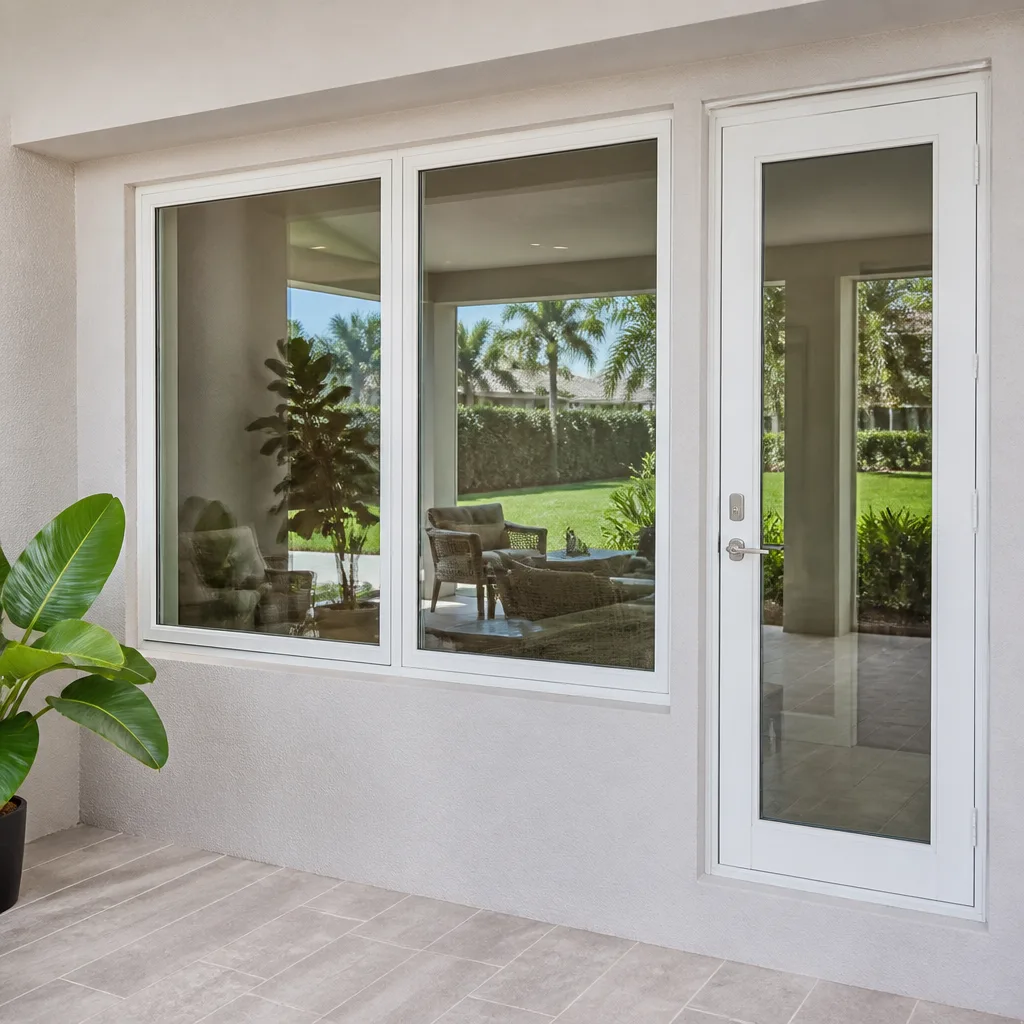 After
AfterWindows & Doors Warning Signs: A Boca Raton Homeowner’s Reference Guide
A window that leaks during a rainstorm is already in late-stage failure. The point of intervention that costs $200 in sealant work happened 12 months earlier, when the weep hole first showed mineral staining and the frame corner gap first measured 1/16 inch. In Boca Raton’s salt-laden coastal climate, most window and door failure is detectable before it becomes visible. This guide teaches you to read the measurable precursors in hardware operation, frame geometry, and sill drainage - the signals that appear 6 to 18 months before you notice a leak or a draft. For a deeper dive, see The Complete Guide to Windows & Doors in Boca Raton.
Quick Answer
The seven warning signs every Boca Raton homeowner should track are: mineral staining at weep holes, frame corner gaps exceeding 1/16 inch, hardware resistance that changes seasonally, frame rattle at 15+ mph wind, salt-corrosion progression beyond white oxidation, door drop at the latch side, and glass fog that persists when indoor humidity is below 55%. These precursors appear in a predictable sequence. Document them twice yearly with a feeler gauge and inspection log, and you will catch failure in the maintenance window rather than the replacement window.
Table of Contents
- Visual Precursors: What to Look For Before Water Appears
- Tactile and Audible Signals: Hardware and Frame Behavior
- Measurable Gaps: Using a Feeler Gauge on Frame Corners
- Thermal-Seal Failure vs. Condensation: The Critical Distinction
- Salt-Corrosion Stages on Aluminum Frames in Coastal Boca Raton
- Door Drop: When 1/8 Inch Means Different Things in Different Construction Types
- The Twice-Yearly Inspection Log: Creating a Documented Baseline
- Common Mistakes to Avoid
- When to Call a Professional
- Frequently Asked Questions
BeforeAfterVisual Precursors: What to Look For Before Water Appears
Water intrusion is the last symptom, not the first. In our work across Boca Raton neighborhoods from Royal Palm Yacht & Country Club to Boca West, we have documented the same precursor sequence on thousands of openings. The first visible signal is almost always mineral staining at the weep holes - those small slotted openings at the bottom of the frame sill designed to drain condensed moisture to the exterior.
Weep holes function on a pressure differential. When the interior glazing cavity accumulates moisture from temperature swings, the weep system channels it out. But when the exterior drainage path becomes partially blocked with salt crust, pollen, or insect debris, water backs up and evaporates slowly, leaving calcium and magnesium deposits as white or gray streaks. This staining indicates that the drainage system is compromised, not that water has entered your wall yet. The maintenance window is open. Clean the weep holes with a pipe cleaner or compressed air, verify daylight through the drainage channel, and the frame may serve another decade.
The second visual precursor appears at frame corners. Vinyl and aluminum window frames expand and contract with temperature cycles. In Boca Raton’s climate, a south-facing dark-frame window can experience daily surface temperatures from 65°F to 140°F. Over years, this cycling stresses the corner fusion joints in vinyl or the mechanical corners in aluminum. A gap of 1/32 inch is normal; at 1/16 inch, the joint seal is beginning to fail; at 3/32 inch, water will find its way in during a driving rain. Measure with a feeler gauge, not estimation. We include this measurement in every window replacement in Boca Raton survey we perform.
Third, examine the glazing bead - the vinyl or rubber strip that holds the glass in the frame. UV degradation in South Florida causes this material to shrink and harden. When the bead pulls away from the glass by more than 1/8 inch at any point, the structural glazing seal behind it is carrying load it was not designed for. This is a precursor to glass slippage in high wind, particularly in impact-rated units where the glazing system is part of the structural assembly.
- Mineral staining at weep holes: Indicates drainage compromise 6-18 months before interior water damage
- Frame corner gaps: 1/16 inch = maintenance window; 3/32 inch = replacement threshold
- Glazing bead shrinkage: >1/8 inch gap signals impending glass slippage risk
- Sealant bead cracking: Perpendicular cracks in exterior sealant indicate substrate movement, not just sealant age
Tactile and Audible Signals: Hardware Resistance and Frame Rattle
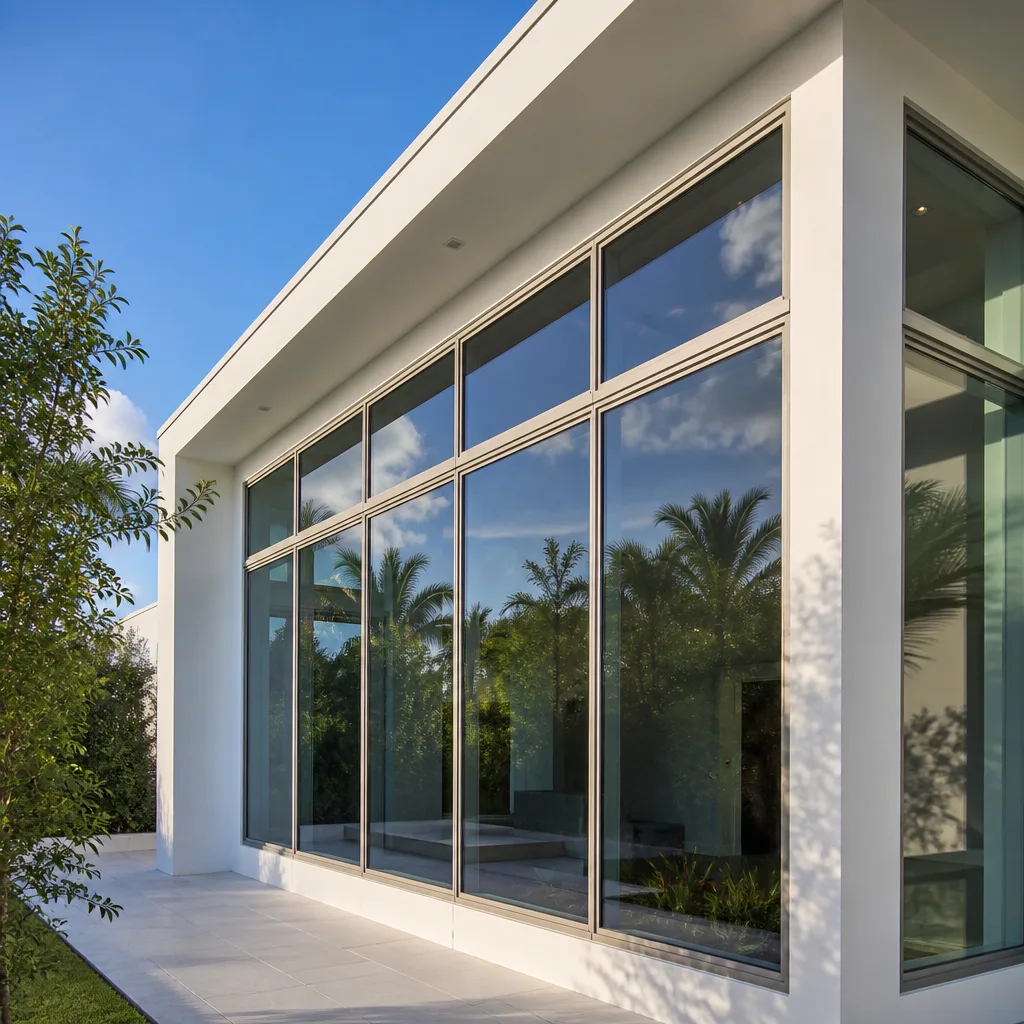
Hardware operation tells a story that visual inspection cannot. The crank mechanism on a casement window should require consistent force throughout its arc - typically 3 to 5 pounds of resistance on a properly sized operator. When resistance increases at the closed position, the frame has racked (twisted) and the sash is binding. When resistance decreases, the operator gears are wearing and the sash will soon fail to pull tight against the weatherstrip.
In Boca Raton’s humidity, we see a specific pattern: seasonal resistance variation. A window that operates smoothly in January may bind in August. This is not humidity swelling the frame; it is the foundation responding to wet-season soil expansion. In neighborhoods east of Federal Highway with sandy, well-drained soils, this effect is minimal. In western Boca Raton where soils retain more moisture, particularly around Sandalfoot Cove and Mission Bay, seasonal binding is common and often misdiagnosed as hardware failure. The correct intervention is frame shimming, not operator replacement.
Audible signals are equally specific. A properly installed window in a Sightline Windows & Doors Boca Raton home survey should not rattle at sustained wind speeds below 25 mph. Rattle at 15-20 mph indicates one of three conditions: insufficient weatherstrip compression, frame movement within the rough opening, or sash-to-frame clearance that has opened beyond specification. Each has a different correction. Weatherstrip replacement is a $40 part and 20 minutes. Frame movement requires removal and reinstallation with proper shimming. Excessive sash clearance means the unit has settled or the hardware has worn to the point of replacement.
The sound to fear is a sharp click or pop during wind gusts. This is glass movement in a compromised glazing pocket. In impact-rated windows from manufacturers like CWS or ES Windows, the glass is laminated and heavier than standard annealed glass. If the glazing system loses compression, the glass can shift against the frame stops. The click is the glass hitting metal. Left uncorrected, this contact point becomes a stress concentrator and the glass will eventually crack from fatigue - not from impact, but from its own weight moving fractionally thousands of times.
- Test crank resistance monthly: Use a luggage scale on the crank handle; note seasonal variation
- Listen at 15-20 mph wind: Rattle indicates weatherstrip or frame issue; sharp click indicates glass movement
- Feel for sash lift: A double-hung sash that requires upward pressure to lock has worn balance shoes or broken cords
- Check sliding door roll: Should move with 5-8 pounds horizontal force; more indicates roller wear or track damage
Measurable Gaps: Using a Feeler Gauge on Frame Corners
The feeler gauge is a $12 tool that transforms subjective observation into documented evidence. We require every technician at Sightline to carry one and to record measurements on the survey document the customer keeps. Homeowners should do the same.
Here is the measurement protocol we use on every window installation in Boca Raton and recommend for homeowner inspections:
- Close and lock the window or door fully. Do not force; use normal operating pressure.
- Insert a 0.015-inch (approximately 1/64 inch) feeler gauge at each corner of the sash-to-frame interface, at the weatherstrip compression point.
- Note where the gauge passes through with light pressure. A uniform slight drag is correct. Free passage indicates inadequate compression. Binding indicates frame racking or excessive weatherstrip.
- Measure the frame corner gap directly: insert the gauge perpendicular to the joint. Record the maximum reading at each corner.
- For sliding doors, measure the gap between the active panel and the fixed panel at top, middle, and bottom. Variation greater than 1/16 inch from top to bottom indicates roller wear or track settlement.
These measurements create a baseline. A corner gap that grows from 0.010 inch to 0.025 inch in 12 months indicates progressive joint failure. A sash-to-frame measurement that was uniform and now binds at the lock side indicates frame racking. The numbers remove argument. If you later dispute a warranty claim or an insurance adjustment, dated photographs with the feeler gauge in position are evidence that carries weight.
In Boca Raton’s coastal environment, we add one measurement: the gap between the frame and the exterior wall surface at the head (top) of the opening. Sealant failure often begins here because water sheds down the wall and pools at the head before running laterally. A gap that admits a 0.030-inch gauge at the head but not at the jambs indicates sealant failure at the most vulnerable point. This is a $150 repair, not a $15,000 replacement, if caught before water enters the wall cavity.
Thermal-Seal Failure vs. Condensation: The Critical Distinction

Foggy glass generates more unnecessary service calls than any other window condition. The distinction is simple but poorly understood: condensation is on the surface; seal failure is between the panes.
Condensation forms on the interior or exterior glass surface when the glass temperature falls below the dew point of the adjacent air. In Boca Raton, this is common in January when cool nights follow humid days, particularly in homes with indoor humidity above 60%. The cure is dehumidification or ventilation, not window replacement. Wipe the glass. If the moisture is on the surface you can touch, it is condensation.
Thermal-seal failure occurs when the edge seal of an insulated glass unit (IGU) degrades and allows moist outside air into the space between panes. The moisture is trapped. It cannot be wiped. It appears as a persistent fog, often in a crescent pattern starting at a corner where the seal is most stressed. Over weeks or months, the fog becomes mineral deposits that etch the glass permanently - a condition called silica haze.
The diagnostic test: on a morning when the glass appears fogged, run the air conditioning to reduce indoor humidity to 45% or below. Wait two hours. Surface condensation will clear. Seal failure will not. Alternatively, press a dry cloth against the interior surface. If the cloth comes away dry and the fog remains, the seal has failed.
In Boca Raton’s market, we see accelerated seal failure in two conditions: west-facing windows with dark frames that experience extreme thermal cycling, and windows installed before 2010 with polyisobutylene primary seals that degrade faster in UV. The replacement is the IGU, not the frame - a $400-$800 repair versus a full replacement. We verify this distinction before recommending any work. Our window replacement in Boca Raton surveys include a thermal-seal assessment at no charge.
One exception: impact-rated IGUs with laminated glass cannot have the IGU replaced separately in most cases. The laminated lite is bonded to the frame system as part of the impact certification. Fog in an impact unit from manufacturers like ECO Window Systems or Mr-Glass typically requires sash replacement to maintain the design pressure rating. This is why documented installation dates and product specifications matter for warranty and insurance purposes.
Salt-Corrosion Stages on Aluminum Frames in Coastal Boca Raton
Boca Raton’s location on the Atlantic coast creates a salt-deposition environment that accelerates aluminum corrosion compared to inland Florida markets. The progression follows observable stages, and each stage has a distinct intervention point.
Stage 1: White oxidation. A chalky, white deposit appears on the aluminum surface, particularly on horizontal members and in sheltered areas where salt spray accumulates but rain does not wash it away. This is aluminum oxide, a protective layer. It is not structural damage. Cleaning with a mild phosphoric-acid-based aluminum cleaner restores the surface. Maintenance cost: $50-$100 per opening.
Stage 2: Pitting. The oxide layer becomes uneven, and small depressions form in the metal surface. These pits retain salt and moisture, accelerating local corrosion. At this stage, the frame is still structurally sound, but the cosmetic damage is permanent. Refinishing with a two-part epoxy coating can extend service life 5-7 years. Maintenance cost: $200-$400 per opening.
Stage 3: Structural section loss. The wall thickness of the aluminum extrusion has been reduced measurably - typically at corners, weep holes, or screw bosses where galvanic corrosion also occurs. A frame at this stage cannot be repaired. The design pressure rating is compromised, and in an impact-rated application, the certification is void. Replacement is required. Cost: $800-$2,500 per opening depending on size and product line.
The critical determination is between Stage 2 and Stage 3. We measure wall thickness with an ultrasonic gauge at the point of greatest apparent corrosion. A residential window frame extrusion typically begins at 0.062 inch wall thickness. At 0.050 inch, we recommend monitoring annually. At 0.040 inch, replacement is indicated regardless of cosmetic appearance. These measurements go on the documented photo record the customer receives under Haven Clause 4.
In Boca Raton, we see Stage 3 corrosion most frequently in homes within 1,000 feet of the Intracoastal Waterway or the ocean, particularly in pre-2000 construction with 6063-T5 alloy frames that lacked the copper-reduced formulations now standard for coastal applications. Homes in Boca Raton Hills and The Sanctuary have shown this pattern consistently in our surveys.
Door Drop: When 1/8 Inch Means Different Things in Different Construction Types

A door that no longer latches cleanly, requiring lift or pressure to engage the strike plate, has dropped at the latch side. The measurement is simple: the gap between the door top and the frame head should be uniform. When the latch-side gap closes to less than 1/16 inch or the hinge-side gap opens beyond 3/16 inch, the door has dropped measurably.
The interpretation depends on construction type. In a wood-frame home - common in Boca Raton’s 1970s-1990s construction, particularly in neighborhoods like Hidden Lake and Timbercreek - door drop of 1/8 inch is a structural warning sign. It indicates sill plate settlement, jack stud compression, or header deflection. The frame is moving. This requires structural assessment before door adjustment, because shimming the door to compensate for ongoing settlement guarantees future failure and may conceal a condition that affects the roof load path.
In a CBS (concrete block with wood truss) home - the dominant construction type in Boca Raton from 1995 forward - 1/8 inch door drop is often normal settling. The block wall does not move, but the wood buck (frame) attached to it can compress slightly as construction moisture dries and fasteners settle. The door can be rehung or the hinges shimmed with expectation of stability. We see this routinely in door installation in Boca Raton callbacks during the first two years after construction.
The measurement protocol: close the door and measure the gap at the head with a feeler gauge at three points - hinge side, center, latch side. Record. Measure the gap at the strike side between door edge and frame stop, at top, middle, bottom. A tapering gap (wider at top, closed at bottom) indicates hinge-side settlement. A parallel gap reduction indicates uniform frame compression. A gap that is closed at the top and open at the bottom indicates sill rise from moisture swelling in a wood buck - common in Boca Raton’s wet season when irrigation or drainage directs water against the wall base.
For sliding patio doors, the equivalent measurement is panel-to-frame gap at the lock side, top and bottom. Differential greater than 1/8 inch indicates roller wear or track settlement. In impact-rated sliding doors from PGT or CGI, this also affects the interlock engagement between panels, which is part of the pressure rating. A door that has dropped to the point of interlock misalignment has lost its impact certification even if the glass is intact.
The Twice-Yearly Inspection Log: Creating a Documented Baseline
The seven measurements that create a defensible baseline require 20 minutes per opening, twice yearly. We recommend May and November in Boca Raton - before and after the wet season. The May inspection catches winter drying damage; the November inspection catches summer moisture effects.
Here is the inspection log template. Record each measurement with the date, and photograph with the measuring tool in frame:
| Measurement | Location | Pass/Fail Threshold | Reading |
|---|---|---|---|
| Weep hole drainage | Both sill ends | Daylight visible; no staining | |
| Frame corner gap | All four corners | ≤1/16 inch | |
| Sash-to-frame compression | Four sides, midpoints | 0.015 in. gauge with light drag | |
| Hardware resistance | Casement crank or sash lift | 3-5 lb consistent; no seasonal variation >1 lb | |
| Wind rattle | Interior, at 15-20 mph sustained | None audible | |
| Glass fog persistence | Interior surface vs. between panes | Clears at <55% RH | |
| Door drop / panel gap | Head gap three points; strike gap three points | ≤1/8 inch differential |
Store these records with your home improvement files. If a warranty dispute arises, if an insurance claim follows storm damage, if you sell the home and the buyer’s inspector questions window condition - dated, photographed measurements are evidence that shifts the burden of proof. We have seen this documentation resolve disputes in the homeowner’s favor in cases where verbal claims would have failed.
The Haven Standard requires that we provide the customer with our measured survey to keep. We encourage homeowners to maintain their own parallel record. The two documents together - professional survey and homeowner inspection log - create a complete maintenance history that protects the investment in any window or door system, whether from our eight manufacturer lines or another source.
Common Mistakes to Avoid
- Applying sealant over corrosion without cleaning. Sealant adheres to oxide, not to metal. The repair fails in 6-12 months and traps moisture underneath, accelerating section loss. Clean to bare metal, treat with conversion coating, then seal.
- Replacing hardware without checking frame square. A new operator on a racked frame fails in 18 months. Always measure frame diagonals before ordering parts; if they differ by more than 1/8 inch, address the frame first.
- Assuming fog requires full replacement. In non-impact units, IGU replacement preserves the frame and costs 40-60% less. Verify the seal has actually failed before accepting a replacement recommendation.
- Ignoring seasonal variation as “normal.” Binding that appears only in August indicates foundation movement, not hardware wear. Shimming the frame corrects the cause; replacing the operator treats a symptom.
- Cleaning weep holes with wire or metal tools. Aluminum weep slots deform easily. Use plastic pipe cleaners or compressed air. A widened weep hole admits insects and loses its pressure-differential function.
- Accepting “they all do that” for wind rattle. Properly installed and maintained windows do not rattle at 20 mph. Rattle is a measurable condition with a specific cause and correction.
- Waiting for visible water to act. By the time drywall stains appear, the wall cavity has been wet for months. Mold remediation and structural repair exceed window replacement cost. The precursor signs exist to prevent this.
When to Call a Professional
Call when a measurement crosses the threshold and you cannot identify the cause. Call when corrosion reaches Stage 2 and you lack the equipment to measure wall thickness. Call when a door has dropped and you do not know whether your home is wood frame or CBS construction. Call when glass fog persists below 55% humidity and you need to confirm seal failure before an insurance or warranty claim.
Sightline Windows & Doors Boca Raton offers free estimates in Boca Raton. We will review your inspection log, take our own measurements, and provide a written scope with named pricing before any work is discussed. Call (561) 200-8592 to schedule. If you have a competitor’s estimate, we provide a free second opinion under the same terms - written review, no obligation.
Frequently Asked Questions

Repair costs range from $150 for weep-hole cleaning and sealant renewal to $800 for IGU replacement in a standard double-hung unit. Full replacement of a 36×72 inch vinyl window with installation runs $1,200-$2,800 depending on performance tier and manufacturer. Impact-rated units from PGT or ES Windows start higher due to certification requirements. The correct choice depends on frame condition, which our survey measures and documents. Call (561) 200-8592 for an exact quote - estimates are free.
No. Haven Clause 1 requires that the written quote and the measured survey are the same document. The price we name before work starts is the price on the final invoice. If we encounter concealed damage - rot in a wood buck, for example - we document it, stop work, and present a revised scope with a new written price before proceeding. No change orders mid-stream.
Look for a permanent label on the glass or frame indicating compliance with Florida Building Code TAS 201, ASTM E1886/E1996, or Miami-Dade County Protocol PA 201/202/203. The label includes a product approval number. If the label is missing or painted over, we can identify the product from manufacturer markings on the hardware or spacer and verify its rating in the Florida Product Approval database. This matters for insurance discounts and resale disclosure in Boca Raton.
Yes, when required by Boca Raton building code. Permit requirements depend on whether the opening is being altered structurally or replaced in-kind. We handle permit application, inspection scheduling, and final approval as part of our standard scope. The permit record becomes part of your documentation package.
A typical single opening takes 2-4 hours to remove and replace, assuming no concealed damage. A whole-home project of 15-20 openings is usually completed in 2-3 days. We schedule start dates, not “sometime next week.” Arrival time is confirmed by text the evening before, per Haven Clause 2.
If any aspect of our installation is not correct - operation, finish, seal, or documentation - we return and make it right at no charge within 365 days of completion. This is written into the Haven Standard on every job, not offered as a discretionary courtesy. The promise is backed by the documented photo record, which eliminates dispute about what was delivered.
The Bottom Line
Window and door failure in Boca Raton is predictable and measurable. The seven precursors - visual, tactile, audible, and dimensional - appear in sequence, and each has a defined intervention point. A homeowner with a $12 feeler gauge, a twice-yearly inspection habit, and a written log can catch failure in the maintenance window, before water enters walls, before hardware destroys itself, before corrosion progresses to structural loss. The alternative is waiting for visible symptoms and paying for the damage that preceded them. We document what we find, name the price before work starts, and leave a photo record when the job is done. That is the Haven Standard, and it has governed every one of the 18,000+ openings we have touched since 2012. Explore more guides & resources to protect your home.
Written by Sonia Raman, Owner at Sightline Windows & Doors Boca Raton, serving Boca Raton since 2012.